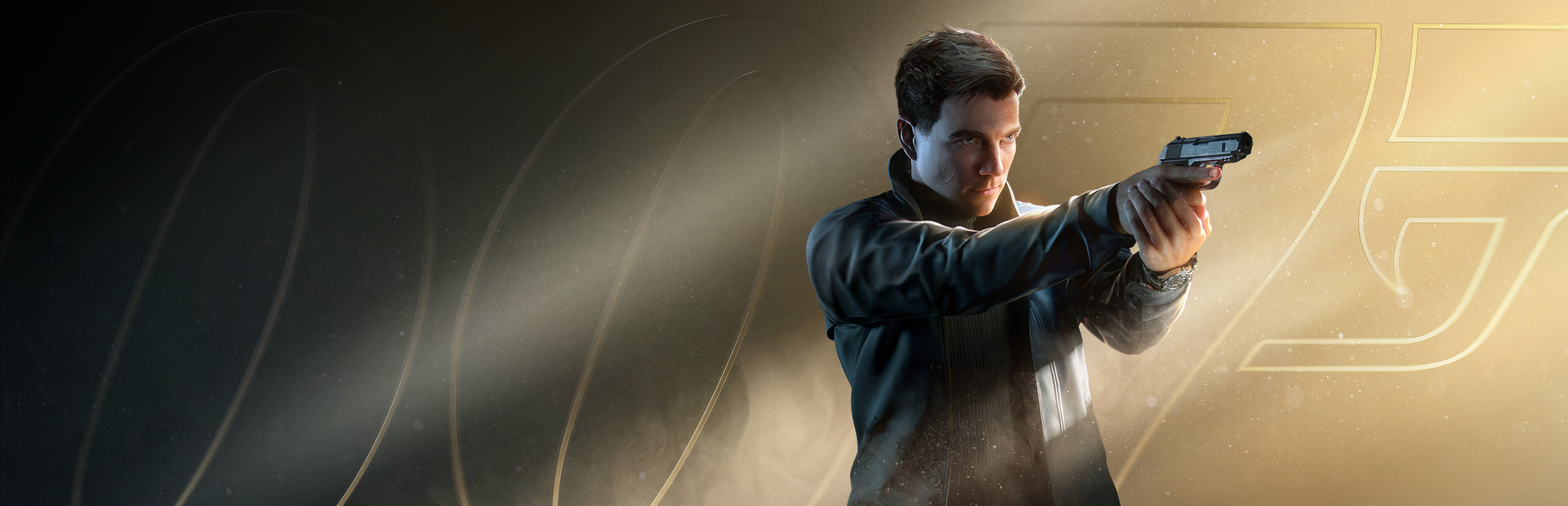
IO Interactive has spent the better part of two decades teaching players to think like assassins. With 007 First Light, the Copenhagen studio takes that same patient, sandbox-first design philosophy and applies it to a name that has chewed up and spat out every developer that's tried to translate it: James Bond. The result, available May 27 worldwide on PS5, Xbox Series X|S, and PC after a 24-hour Deluxe Edition early access window on May 26, is the most confident, most cinematic, and most genuinely Bond-feeling video game since Rare's GoldenEye 007 on the Nintendo 64 nearly three decades ago. It is also the rarest of things in 2026: a single-player action-spy thriller that lands its tone, its mechanics, and its story all in the same breath.
This is an origin story, and IO Interactive treats that word with the respect it deserves. Patrick Gibson's 26-year-old James Bond is not a finished operative being shuffled through cinematic set pieces. He is a recruit - cocky, undertrained, occasionally sloppy, occasionally brilliant - whom MI6 reluctantly brings into the fold after he survives an Iceland operation that should have killed him. M, played by Priyanga Burford as the steadiest performance in the cast, makes a calculated bet on the kid. The rest of the game is the bet paying off, slowly and unevenly. That arc, more than any specific gunfight or stealth section, is the engine that makes First Light land.
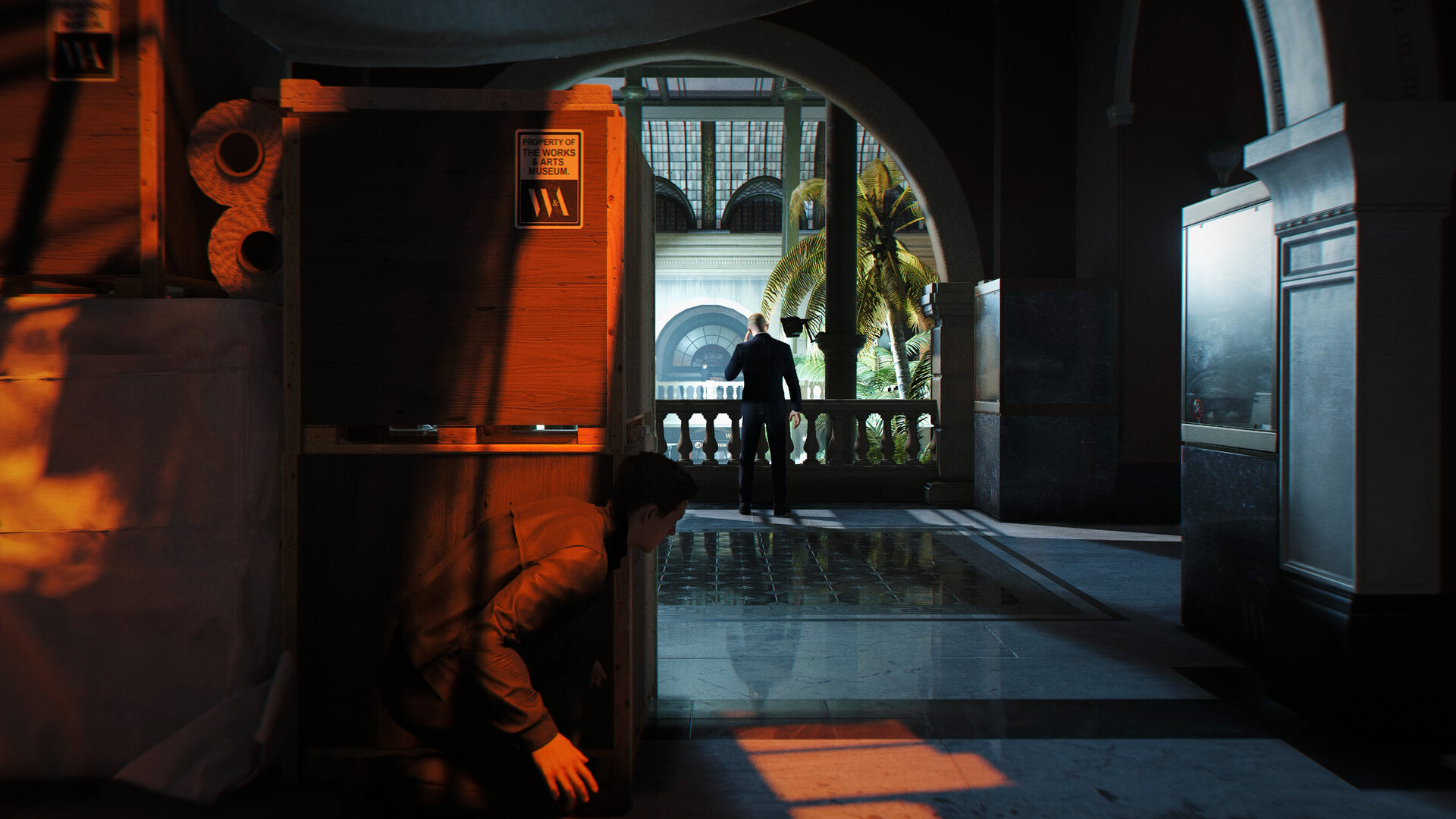
The combat-and-stealth loop is where IO Interactive's DNA shows hardest. First Light is built on the same in-house Glacier Engine that powers Hitman, and the family resemblance is unmistakable from the first mission. Bond approaches problems the way Agent 47 does - reading patrol routes, eavesdropping on guards, picking up disguises, weaving through embassies and warehouses and high-society balls looking for the seam that opens up his target. But this is not Hitman with a different protagonist. It is a deliberately scaled-down, more linear take on that sandbox formula, with the off-ramps narrower, the targets fewer per mission, and the action set pieces orders of magnitude louder when they kick in.
That trade-off is the one that will divide hardcore Hitman players. First Light is more cinematic, more directed, and less freeform than IO Interactive's flagship series. It is also, by every measure that matters to a Bond game, the right call.
An origin story that earns its hours
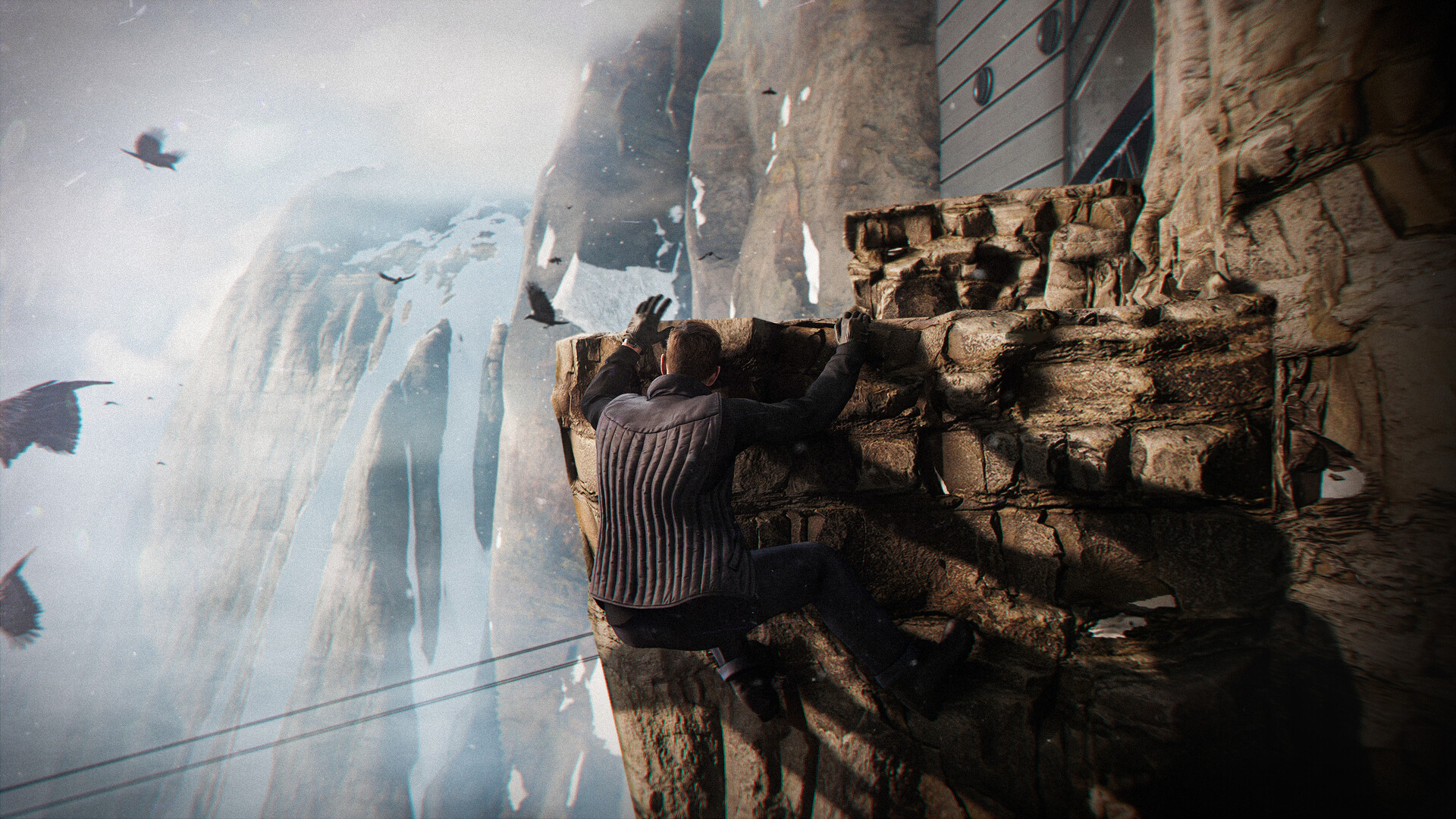
First Light opens in Iceland. Bond is twenty-six, freshly washed out of one assignment, and pulled into another that he should have no business surviving. The Iceland chapter is the game's prologue and its mission statement at once: a freezing, low-visibility infiltration that asks you to navigate hostile terrain with limited tools, no support, and no real understanding of what's actually happening on the ground. By the time you exfil, MI6 has noticed - and so has the villain operating in the background, whose presence Bond does not yet understand.
From there, the campaign unfolds across roughly fifteen missions, structured as a slow climb from MI6 recruit to fully-licensed 00 agent. Patrick Gibson's Bond starts the game without the polish that defines every screen version of the character. He drinks too fast at the wrong parties. He puts his foot in his mouth around superiors. He flirts catastrophically with a CIA contact in Marrakesh. He gets called out by M for it. Then, mission by mission, he gets better - not in a montage, but in the slow accretion of skills, contacts, and confidence that the writing actually pays attention to. By the time Bond walks into the third-act ballroom, the character has earned the tuxedo.
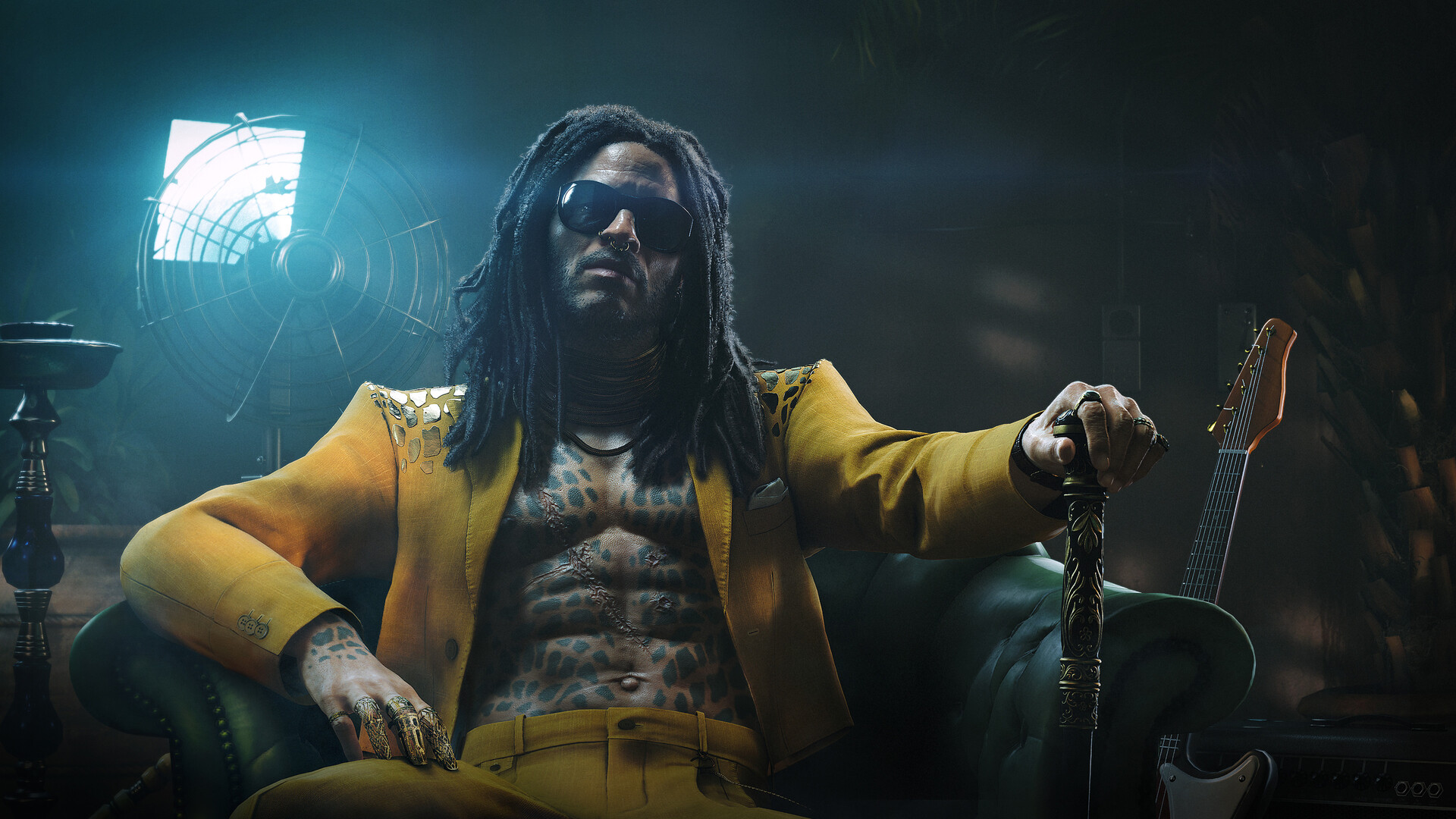
That writing is, frankly, the surprise of the year. The script - credited to a team led by Phil Huxley with input from the Amazon MGM stewards of the broader Bond IP - resists the urge to flood the dialogue with quips or to lean on the franchise's catchphrase economy. Lines like 'the name's Bond' do not appear in the first ten hours; when they finally land, they arrive in a context that makes them feel like a character finding his voice rather than a developer checking a box. The supporting cast - Gemma Chan as a French intelligence handler, Lenny Kravitz as the antagonist whose long-term agenda anchors the game, Priyanga Burford's M, and a procession of one-mission side characters - all get more interiority than a Bond video game typically affords them. You will remember names. You will remember faces. That is not a low bar Bond games have historically cleared.
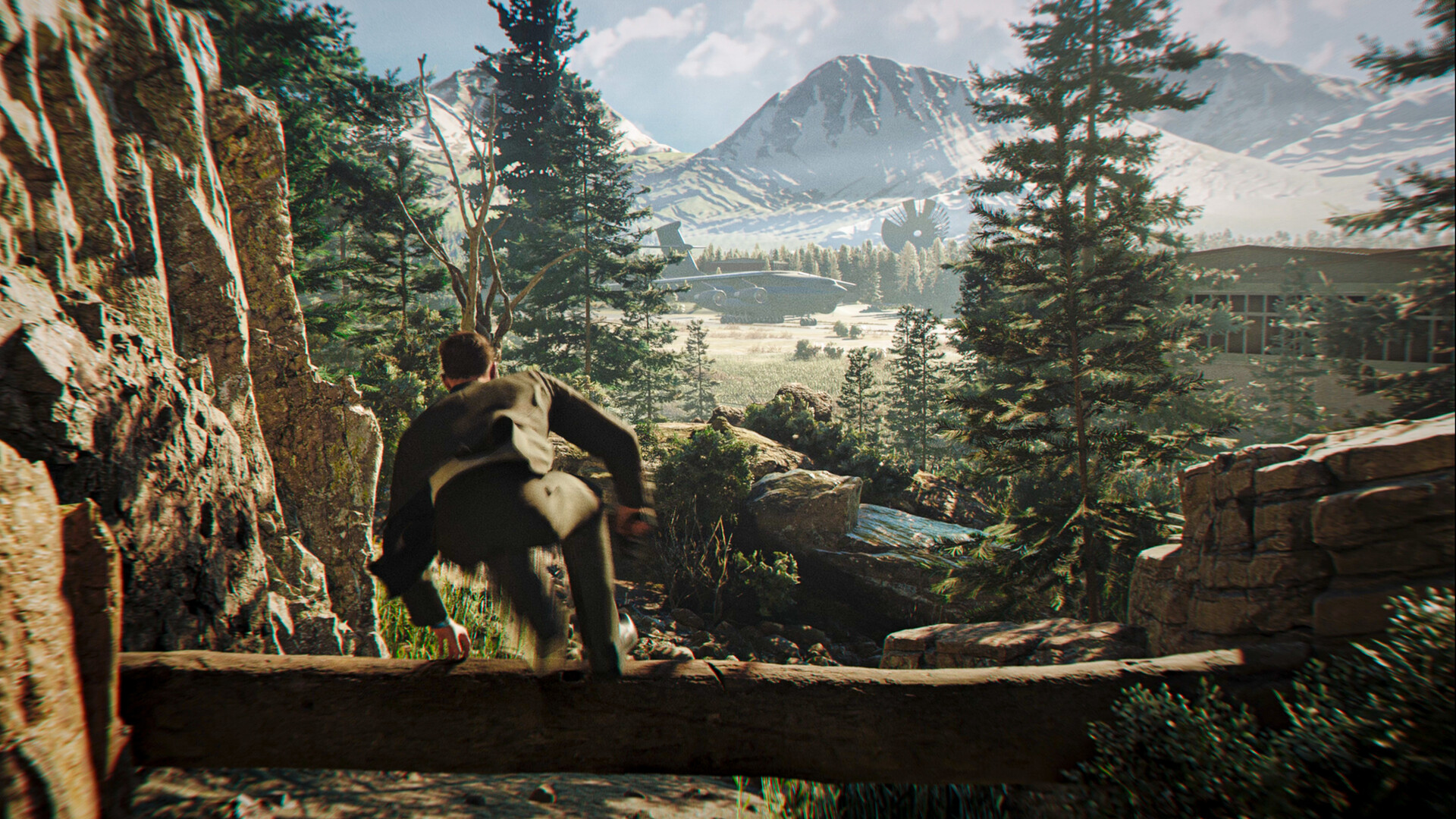
The pacing of that character work is unusually patient for a thirty-hour AAA action game. Most modern blockbusters compress their arcs into the first six hours, then spend the rest of their runtime escalating the spectacle. First Light does the opposite - it spends ten hours establishing Bond as a deeply imperfect operative, six hours putting him through escalating professional trials, then four hours of payoff in which the version of Bond who walks through the climax is recognizably the version we have been watching the films play since 1962. That structural patience is the kind of choice you only see when a development team has the runway and the institutional confidence to make it. IO Interactive, fresh off the World of Assassination trilogy, clearly had both.
The Glacier Engine, repurposed
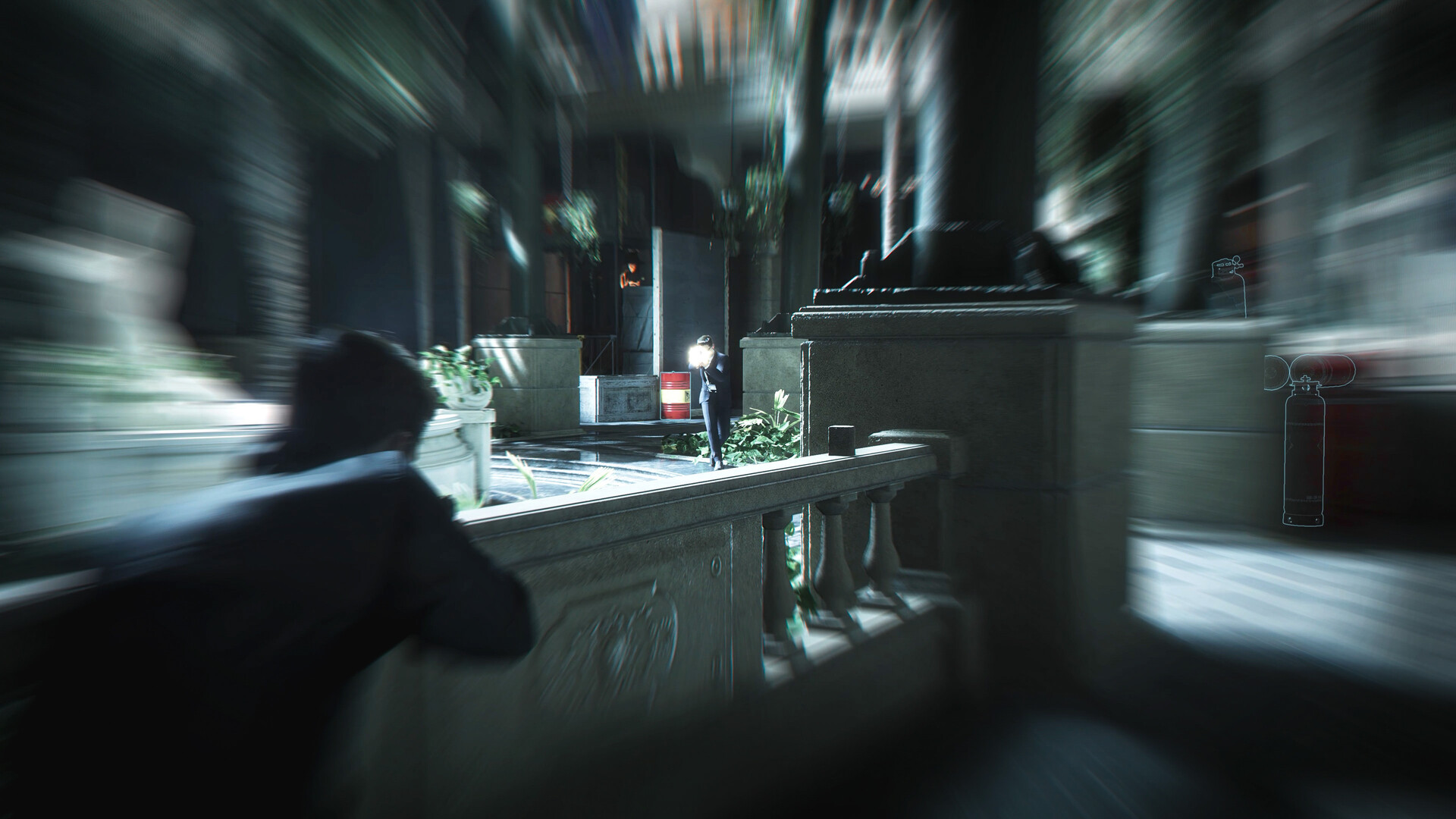
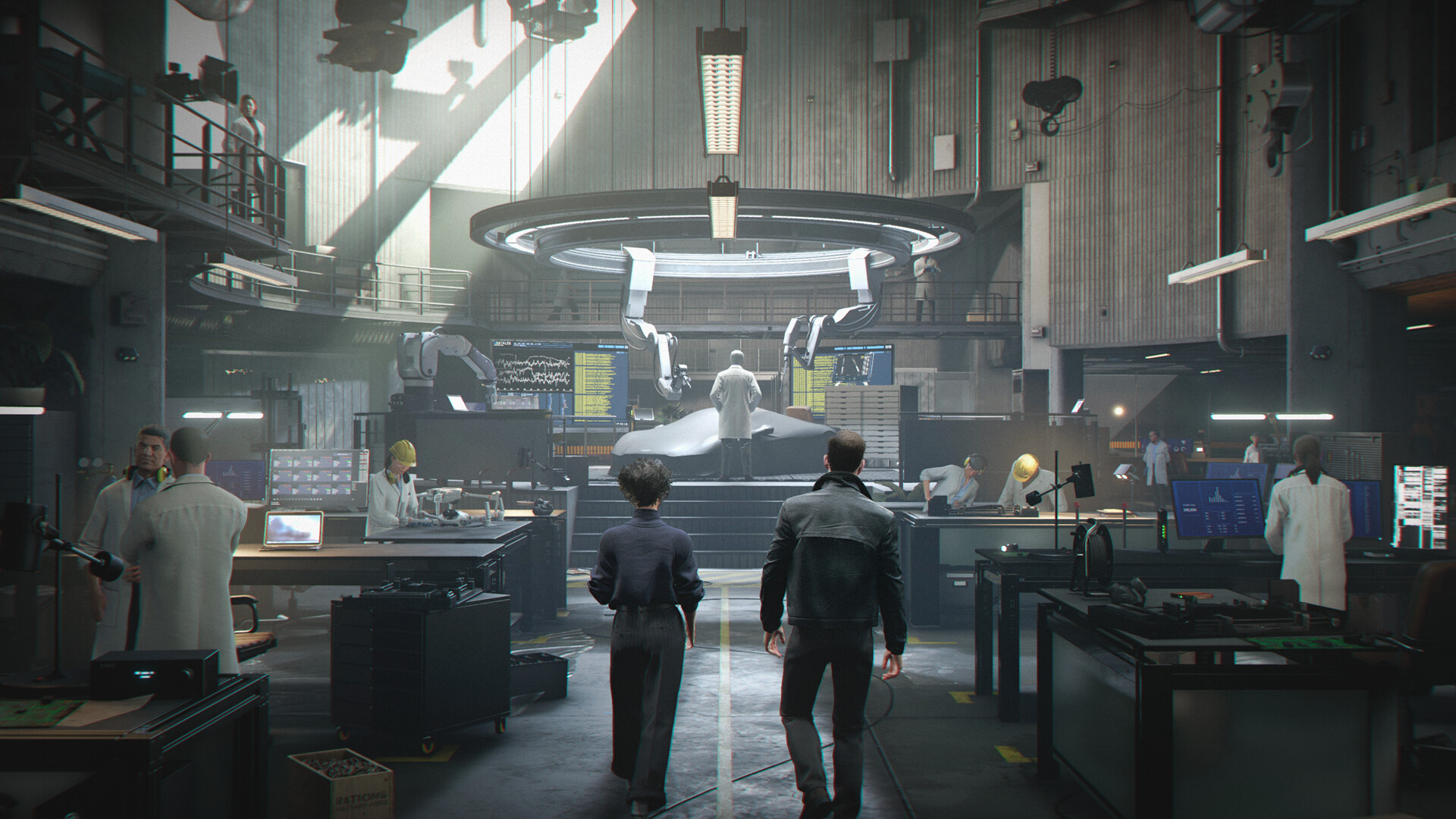
Mechanically, First Light is built on three intertwined loops: stealth-infiltration, sandbox-deduction, and cinematic action. The stealth loop is the most familiar to IO Interactive's audience. You can pick up most NPC disguises, you can knock guards unconscious and stash them in closets, you can eavesdrop on conversations to pick up codes and location intel, and you can plan your route through any given mission's main spaces. Crowd-blending works the way it does in Hitman, and most of the campaign's interior environments - the embassies, the casinos, the laboratories - are designed with the same load-bearing density of escape routes, vents, scripted patrols, and environmental kills that the studio's flagship is known for.
What is different is the public-private divide. In Hitman, Agent 47 can walk into a ballroom and start dropping bodies if the situation calls for it; the puzzle is engineered so that decorum-breaking is a viable - if loud - solution path. In First Light, Bond cannot break decorum in public spaces. You cannot draw a pistol in front of civilians. You cannot lob a homing briefcase at a target through a crowded gallery floor. The crowds are read-only environments, places where you can blend, deduce, and pickpocket but not actually engage in violence without breaking the entire scenario and triggering a hard mission fail.
That constraint reads, at first, as a regression from Hitman's freedom. It quickly reveals itself as something else: an aesthetic choice that defines the difference between an assassin's game and a spy's game. Bond does not murder civilians. Bond does not detonate the embassy. Bond manipulates the room, finds the target, and removes him quietly - or, when the situation goes sideways, fights his way out through the service corridors. IO Interactive has not stripped freedom from the player. They have constrained the freedom to the spaces where Bond, as a character, would actually use it. That is design discipline, not laziness.
The deduction loop, which is genuinely new for IO Interactive, is one of the most interesting systems in the game. Bond can eavesdrop on conversations, pickpocket documents, and read environmental clues - a half-finished glass, a phone number scrawled on a napkin, a guard's nervous fidget - to build a mental dossier on a mission's actual objective. That dossier sometimes diverges from the briefing M gave Bond at the start of the chapter, and when it does, the player is faced with a small but real moral choice: trust the institution, or trust what Bond has just seen with his own eyes. The game does not punish either path, but the long-term narrative consequences differ in ways that genuinely encourage second playthroughs.
Gunplay that knows when not to show up
When the action kicks in, First Light surprises with how good its gunplay actually is. IO Interactive's previous combat work in Hitman has always been functional rather than satisfying - a backup option for when the stealth loop falls apart, rarely the headline. Here, the studio has built a third-person shooter that holds up against anything Naughty Dog or Sony Santa Monica have shipped in the same generation. The weapon feel is heavy without being sluggish. Reloads are tactile. Headshots are loud and decisive. Cover is generous but never automatic.
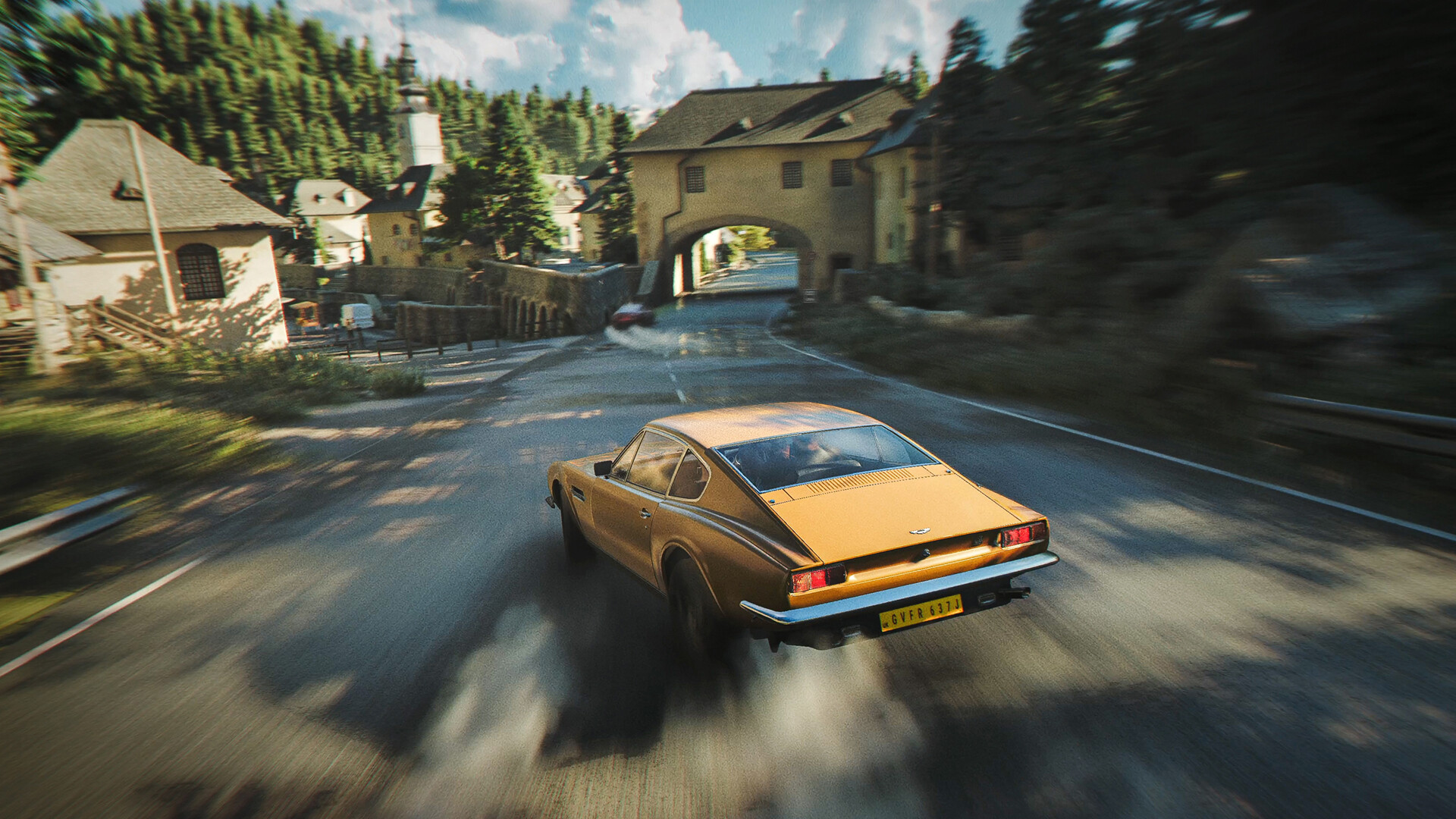
Critically, the gunplay is rationed. There is roughly one major firefight per mission - sometimes two in the later chapters - and the game knows when to deploy them. They arrive when the stealth puzzle has collapsed, when the script demands a chase, or when an extraction has gone wrong, and they last just long enough to feel earned. The structure echoes Uncharted's better moments: long stretches of quiet exploration and traversal punctuated by violent, cinematic engagements that the game does not overstay. The single best firefight in the campaign - which I will not spoil here, but it involves a French vineyard, a stolen Aston Martin, and a moving train - is the kind of set piece that will get clipped to social media for the next six months.
Hand-to-hand combat is the other half of the action loop. Bond is a credible brawler from the beginning of the game, with a counter-based melee system that rewards reading enemy animation tells and exploiting environmental hazards - banisters, kitchen knives, table edges - in the way the films have leaned on for decades. Boss fights make the most of this system. The Lenny Kravitz villain encounter that closes Act Two is the standout, both for its choreography and for how its tempo shifts mid-fight as the script reveals what the antagonist actually wants from Bond.

The weapon roster is intentionally restrained. Bond's signature Walther PPK, which the game does not hand him until well into the second act, is the workhorse pistol. A small collection of long guns - a suppressed submachine gun, a hunting rifle for one specific mission, a CIA-provided carbine for another - rotates in for set-piece situations. There is no skill tree to grind. There are no weapon mods to unlock. There is no battle pass dripping new firearms into the rotation each season. What you bring into a mission is what the script has decided Bond would credibly carry into that mission, and the discipline of that choice keeps the game's gunplay feeling like an extension of the character rather than a checklist.
A world that travels
One of the most underrated aspects of First Light is how well it travels. Bond is, structurally, a globe-trotting franchise, and the game treats that as a design problem to be solved rather than a marketing checkbox to be ticked. The fifteen missions move through Iceland, Morocco, Vienna, Hong Kong, the Pyrenees, the South of France, and a final-act location that I will leave for players to discover. Every one of those locales has a distinct visual language, a distinct sound design, and - critically - distinct mission mechanics that exploit the specific texture of where you are.
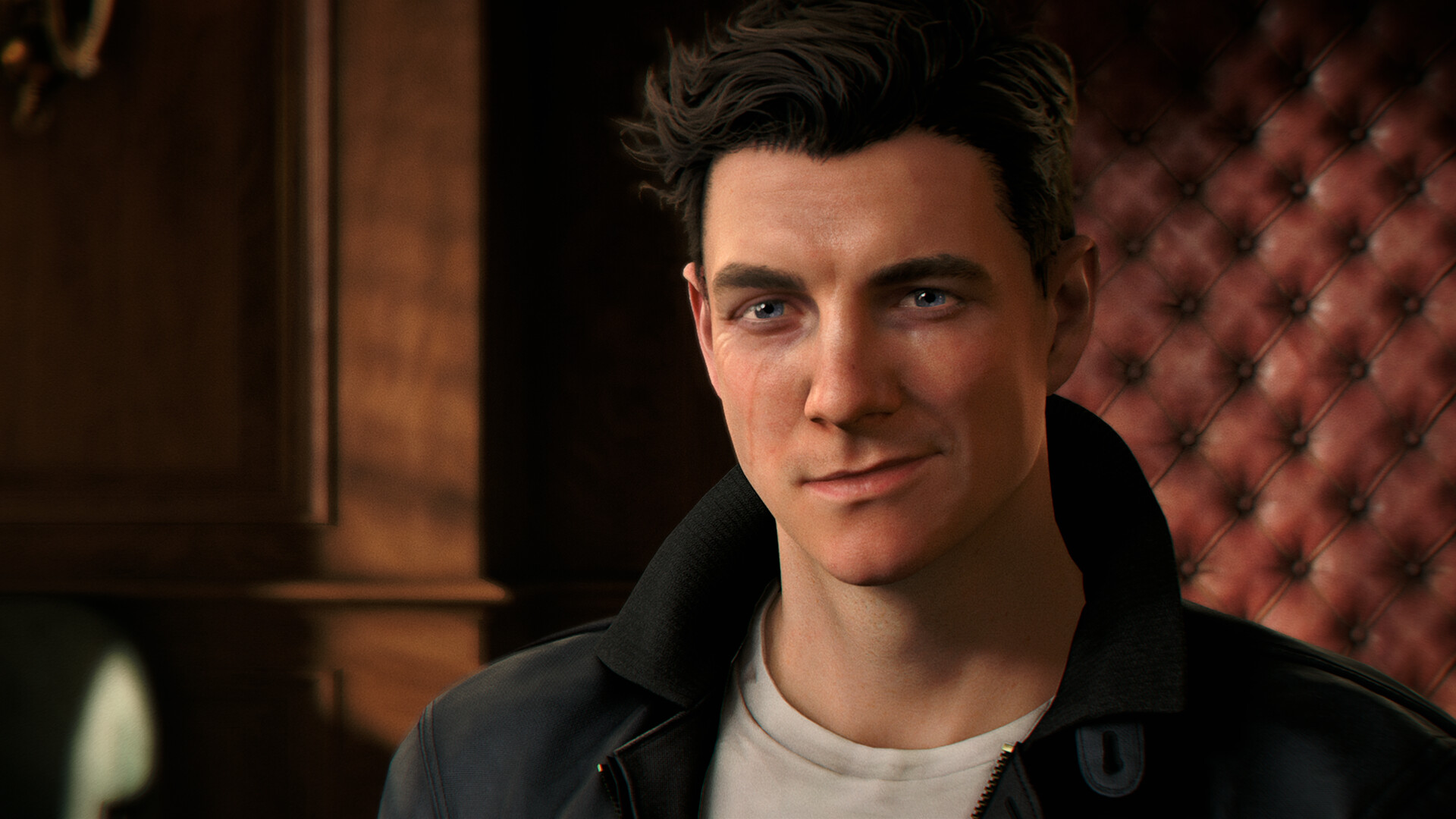
The Marrakesh chapter, for instance, leans on rooftop traversal and crowded medina chases in a way that no other mission in the game does. The Vienna chapter is a single sprawling state-opera-house infiltration, the closest the game comes to a classical Hitman mission, with multiple intersecting solutions. The Hong Kong chapter is a vertical mission set across three floors of a glass-and-steel tower during a corporate fundraiser, and it might be the best level IO Interactive has designed since Hitman 2's Mumbai. The variety is not just cosmetic. Each location forces the player to recalibrate which of the game's tools - disguise, social manipulation, gunplay, traversal - is the right one for the moment.
The South of France chapter deserves a paragraph of its own. It is the single longest mission in the game, set across a Cote d'Azur villa, an adjacent vineyard, and the coastal road that connects them, and it functions as a microcosm of what First Light does best. The villa portion is pure social-infiltration Hitman, with Bond moving through a fundraiser populated by oligarchs and arms dealers, picking up disguises and conversations to triangulate the actual target. The vineyard portion shifts into mid-tier stealth, with patrolling guards and environmental kills. The coastal road portion is the train chase that I referenced earlier - a fully scripted, fully cinematic Aston Martin set piece that pulls every gunplay, driving, and traversal mechanic the game has taught you into one ten-minute sequence. It is the rare modern action-game moment that earns the comparison to its film equivalents.
Each location is also rich enough to support optional intel gathering that extends beyond the critical path. The game does not flag these objectives on the map - it expects you to find them by eavesdropping, by reading environmental detail, by trusting that an oddly placed file cabinet might be worth investigating. Players who treat First Light as a checklist will miss the layered storytelling that this approach unlocks. Players who treat it as a slow, observational game in the mold of older immersive sims will find a campaign that rewards patience in a way modern AAA action games rarely do.
The supporting cast does heavy lifting
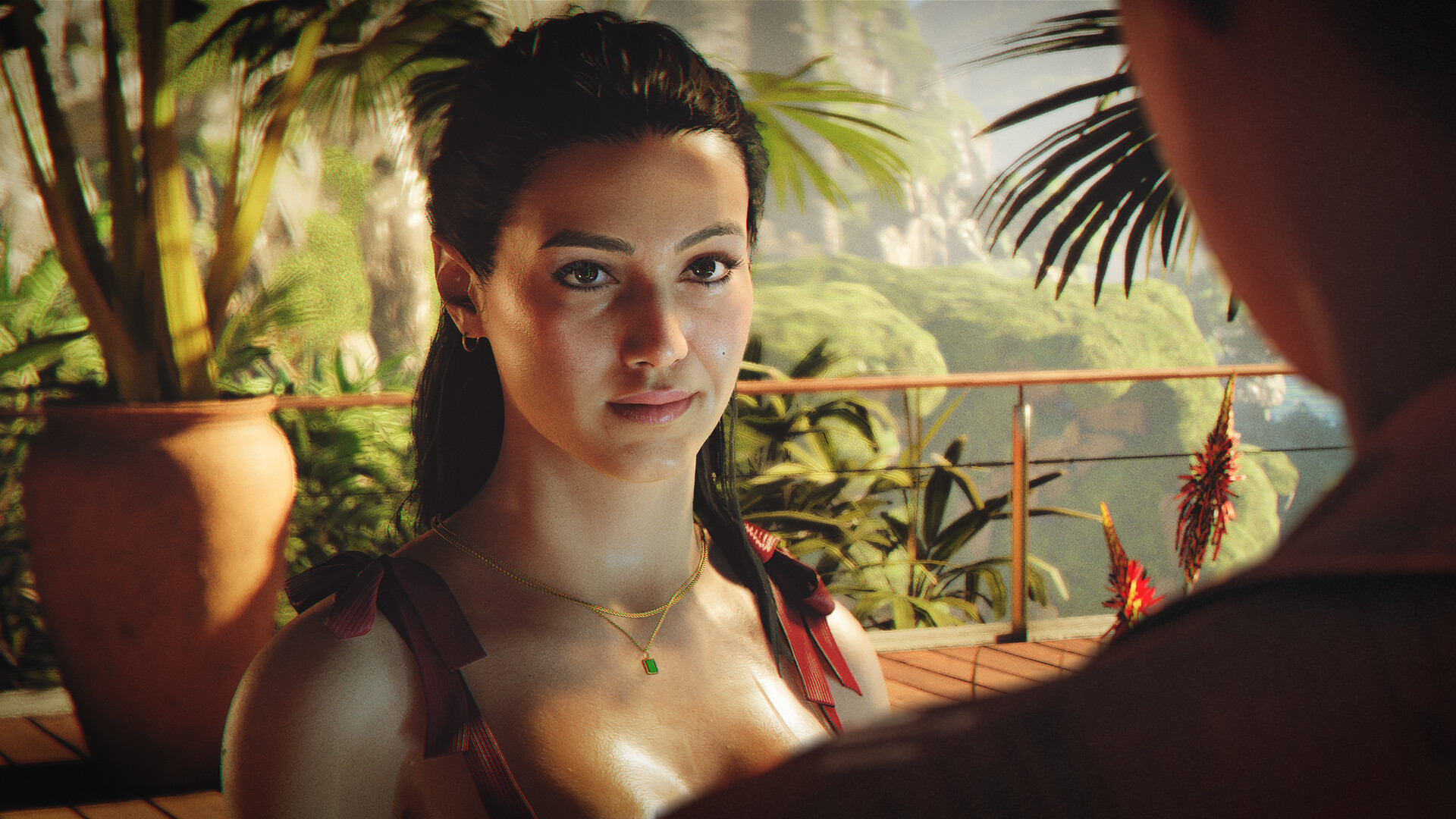
Gemma Chan's character - a French DGSE operative named Camille Aubry whom Bond encounters in three of the campaign's chapters - is the strongest of the supporting performances. She is not a love interest in the reductive sense that Bond films have historically used the term. She is a peer operative with her own agenda, her own bosses, and her own willingness to use Bond when convenient and discard him when not. The chemistry between Gibson and Chan does most of the work of selling that dynamic, but the script gives them real material to work with - including a late-game scene in which Camille calls Bond out for thinking he has the moral high ground, and Bond, in a moment that defines the character's arc, does not have a clever response.
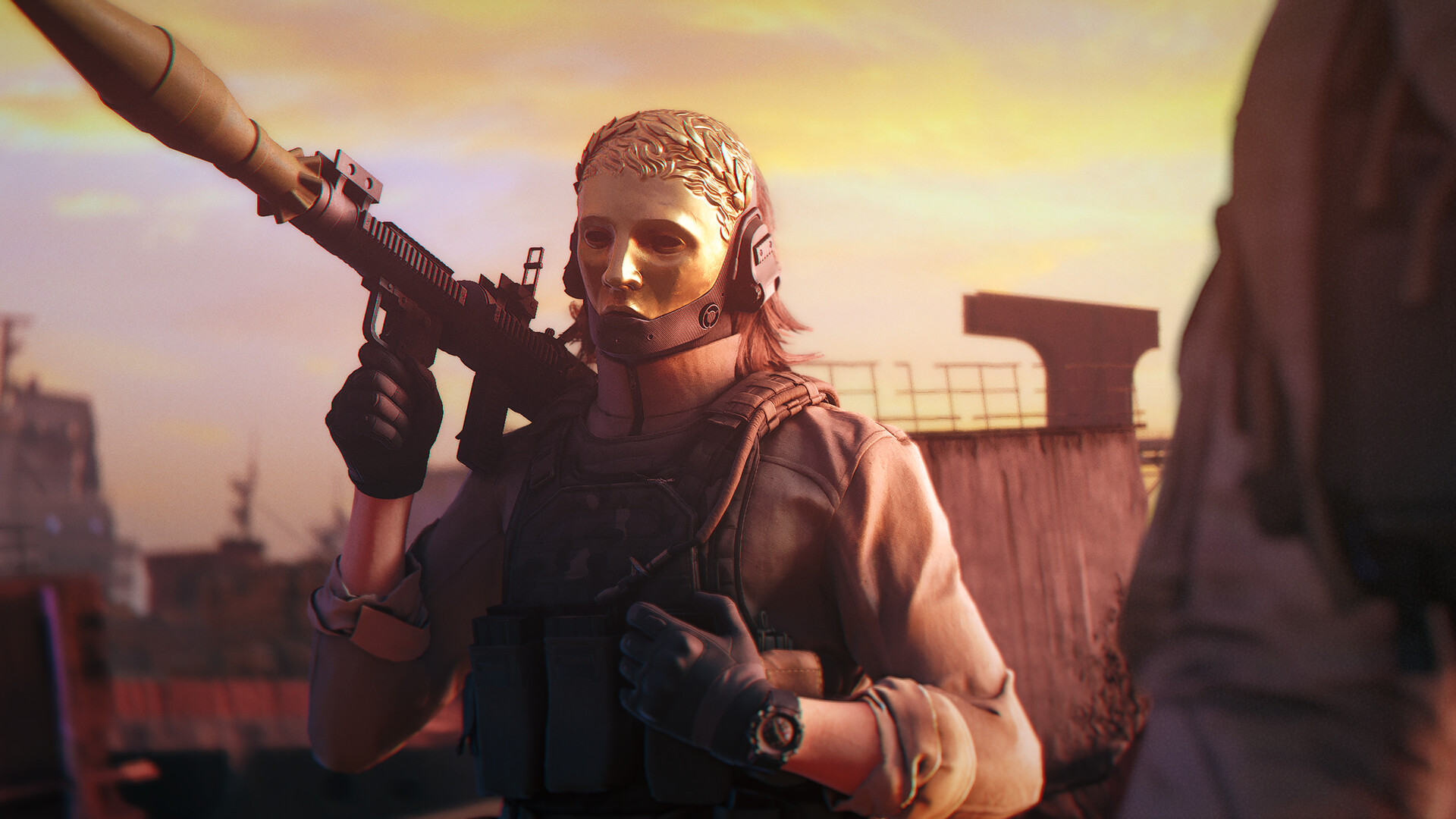
Lenny Kravitz as the villain is a casting decision that could have gone wrong in a dozen ways. It does not. Kravitz plays his character - a self-styled philanthropist named Vance Sterling - with a kind of measured charisma that makes him feel like a real threat rather than a panto antagonist. His scenes are short but consistently memorable, and his motivations escape the most common pitfall of Bond villainy: he wants something specific, achievable, and frankly logical from his point of view. The reveal of what that something is - in the late second act - is the kind of plot beat the franchise has not earned this cleanly in decades.
The smaller roles do a lot of the texture work. Priyanga Burford's M is steely and unsentimental in a way that distinguishes her from any previous screen M, and the script gives her a recurring beat - a quiet, slightly hostile assessment of Bond's progress at the end of each chapter - that becomes one of the most anticipated rhythms of the campaign. Q is present but used sparingly, and the script wisely treats him as a logistical character rather than a comic-relief gadget vending machine. The CIA contact in Marrakesh, a one-mission character voiced by an actor I will not name to preserve a small surprise, gets the funniest dialogue in the game and one of its better mid-mission betrayal beats.

And then there's the soundtrack. Lana Del Rey's title song is the kind of slow-burn ballad that the franchise has periodically nailed (Sam Smith, Adele) and periodically fumbled. Hers is firmly in the nailed column - melancholic, restrained, structurally clever, and immediately memorable. Hans Zimmer's orchestral score does the heavy lifting underneath, with restrained motif work that builds across the campaign rather than peaking in any single cue. Audio direction is, top to bottom, the most cinematic IO Interactive has ever produced. The Dolby Atmos mix on PS5 deserves a particular shoutout - the spatial audio work during the indoor stealth sections is some of the best in the medium, with conversations carrying down hallways with realistic falloff and footsteps cuing you to off-screen patrols with positional clarity that genuinely affects play.
What does not work
First Light is not flawless. The compromises it makes to translate the Hitman sandbox into a more cinematic, more linear Bond game create rough edges that hardcore IO Interactive fans will feel immediately. The biggest of those is the loss of the radical decorum-breaking that Hitman's public spaces invite. You cannot, as you can in any Hitman game, decide mid-mission that you are going to abandon stealth, walk into the ballroom in a tuxedo with a silenced pistol, and quietly assassinate the target. The game will hard-fail you long before you can make that work.
Enemy AI, while broadly competent, has bad moments. There are stealth scenarios where a guard's awareness state seems to reset for no reason. There are firefights where enemies will cluster in cover positions in a way that breaks the choreography. There are mission failure states that occasionally trigger on what feels like a coin flip - did the guard actually see Bond through that doorway, or is the game punishing you for being in the wrong room? These are the kind of small-but-real frictions that show up in any large sandbox game, but they show up often enough in First Light's twenty-five-hour campaign that they deserve to be flagged.
The mission structure, for all its variety, can also feel formulaic in a way the writing does not. Almost every chapter follows the same beat sheet: arrive, observe, deduce, infiltrate, action set piece, exfil. The variation comes in the texture of those beats, not in their order. Players coming off the recent Hitman games, which experimented more aggressively with mission shapes, will feel the predictability. Players coming off the Uncharted or Tomb Raider end of the action-adventure spectrum will probably not notice it at all.
And on PC specifically - although I tested primarily on PS5 - early launch-week reports suggest the Glacier Engine port has some optimization issues that IO Interactive will need to patch quickly. Frame pacing on certain hardware configurations has been inconsistent, and a small but vocal subset of players have reported memory leaks during longer play sessions. Console performance, by contrast, has been rock solid, with the PS5 Pro version in particular running at a locked sixty in performance mode with what looks like minimal compromise. Xbox Series X performance matches the PS5 baseline closely; Series S runs at thirty in a slightly lower-resolution mode that holds up better than expected given the texture density First Light is pushing through it.
Cutscene direction is another area where the game occasionally stumbles. Most of the campaign's narrative beats are delivered through in-engine cinematics, and IO Interactive's animators have come a long way - but a handful of dialogue scenes have wooden facial work that pulls you out of the moment. This is not a Naughty-Dog-level performance-capture pipeline, and the difference shows in the talky chapters between missions. The action scenes are choreographed beautifully; the conversations sometimes feel like they were animated by a different team.
Inventory management is a final small gripe. The game uses a slot-based loadout system that requires you to pick your tools at the start of each mission, and the UX of that loadout screen is genuinely confusing for the first three or four hours. Knowing which gadget pairs well with which disguise becomes intuitive eventually, but the onboarding does not do as much hand-holding on this front as it does elsewhere. A patch in the first month would benefit from a clearer loadout flow.
The cinematic-game balancing act
What makes First Light land is something quieter than any of its individual systems. It is the way IO Interactive has resisted the worst impulses of the modern AAA action game. There is no open world bloated with collectibles. There is no skill tree that funnels every gameplay improvement through ten hours of busywork. There is no Ubisoft-style icon vomit on the map. There is no microtransaction store, no day-one DLC pack, no battle pass. There is, instead, a focused, twenty-five-hour, single-player-only action-spy thriller that knows exactly what it wants to be and trusts the player to come along for it.

That trust pays off in the late-game material. The third act is the strongest stretch of the campaign, where the slow build of Bond's competence pays off in mission designs that demand the full toolkit - stealth, deduction, social manipulation, gunplay, traversal, and improvisation - in rapid succession. The Pyrenees infiltration that opens Act Three is one of the most satisfying single missions IO Interactive has ever designed, and the finale, set in a location I will not spoil, manages to be both an action set piece and a character payoff at the same time. There are no false endings. There are no DLC-shaped holes in the climax. The game tells its story, brings its arcs to a close, and stops.
Replayability is built into the structure in a subtle way. Once you finish the campaign, the game unlocks an Encore mode that re-runs each mission with optional Director's Cut objectives - alternate target priorities, time challenges, no-disguise runs, no-kill runs - that reward different play styles than the critical path encourages. The mode is not as expansive as the Escalation system that Hitman built out across its trilogy, but it is meaningfully more than the standard New Game Plus most narrative AAA games ship with, and it gives the campaign's better missions a second life.
Performance, accessibility, and presentation
I split my testing across roughly twenty hours on a PS5 Pro and four hours on a Series X. On both consoles, the performance mode locks at sixty frames per second with minor dynamic resolution scaling that I could not see during play. The fidelity mode runs at a stable thirty with what looks like full native four-K resolution and slightly upgraded volumetric lighting; I switched to performance mode by the second mission and never went back. Loading times, even with the Glacier Engine's larger interior spaces, are negligible - sub-five-second restarts after a mission failure, which encourages experimentation with the stealth puzzles.
The accessibility menu is unusually robust for IO Interactive. There are toggles for guard awareness markers, a colorblind-aware UI layer, a difficulty selector for the gunplay portion that can be set independently from the stealth difficulty, and a generous arrange of remap-and-hold-to-toggle controls. Subtitles support multiple font sizes, background opacities, and speaker labels. There is a separate audio-only navigation mode that adds sonic cues for environmental interactables. It is not a Last of Us Part II level of accessibility, but it is closer to that benchmark than any previous IO Interactive game.
Visually, First Light is the studio's best-looking project to date. The Glacier Engine handles crowd density better than almost any other engine in the medium, and the indoor lighting work - particularly in the Vienna opera house and the Hong Kong tower - shows off ray-traced reflections that genuinely change the feel of those spaces. Character models are excellent, especially in the close-up dialogue framings where the lip sync is locked tight. There are occasional pop-in moments in larger exterior environments, and the foliage shading in the South of France vineyard has some shimmer issues that should patch out quickly, but these are minor blemishes on what is otherwise the most polished console release of 2026 so far.
The Bond comparison nobody can avoid
Critics calling First Light the best Bond game since GoldenEye 007 are not being hyperbolic. There has been a generation of mediocre Bond games in between - the Activision era's Quantum of Solace, Blood Stone, 007 Legends, the recurring From Russia with Love and Everything or Nothing reissues - and almost all of them treated the license as an extractive asset rather than a design challenge. First Light is the first Bond game in twenty-eight years that has been designed around what makes Bond Bond, rather than around licensing what the franchise is selling that quarter.
The difference shows up in the small choices. The way Bond enters a room. The way he checks his exit before he checks his drink. The way the camera lingers on a character's hands before it cuts to their face. The way the script knows when to deploy the franchise's iconography - the gun-barrel sequence, the martini order, the eventual handing-out of the Walther PPK - and when to withhold it. IO Interactive has watched the films. More importantly, they have read Fleming. The Bond that emerges over First Light's twenty-five hours is recognizably a younger version of the man who, in the original novels, drinks too much, sleeps badly, and does the job because it is the only thing he is good at.
The Amazon MGM imprimatur deserves credit for keeping the franchise's tonal restraint intact. There were obvious commercial temptations on the table - tie-in cameos from beloved film actors, on-the-nose references to recent Bond movies, marketing-friendly setups for a sequel that nobody asked for - and IO Interactive does not take any of them. First Light tells its own story with its own characters, and the only Bond-universe Easter eggs in the game are the ones the script earns. That restraint, more than any other single creative choice, signals that this is a franchise being curated rather than monetized.
How First Light fits among 2026's other AAA shooters
The competitive set for First Light, calendar-wise, is brutal. The first half of 2026 has already shipped Saros, the new Forza Horizon entry, Subnautica 2's early access, and the Battlefield 6 mid-season content drops. The back half of the year will bring Marvel's Wolverine, GTA 6 in November, and a back-loaded fall calendar that includes the long-awaited Ghost of Yotei follow-up. In that context, First Light occupies a specific niche - the slow-burn cinematic single-player thriller - that the rest of the year's calendar leaves mostly unoccupied. If you are a player who wants a Naughty Dog or Sony Santa Monica style experience in 2026 and you do not want to wait for Wolverine, this is the game to clear the calendar for.
It also lands at a moment when the broader AAA industry is publicly questioning whether thirty-hour single-player productions are commercially viable. Sony's recent strategy reversal away from PC ports - announced just one week before First Light's launch - has put renewed weight on each first-party-style premium release to justify the development investment. IO Interactive is not first-party Sony, but the dynamics are the same. First Light needs to prove that an ambitious cinematic thriller can pay its bills without live-service hooks. Early review scores and reported pre-order numbers suggest it will, and the implications of that for the rest of the industry are worth watching.
Looking ahead: patches, DLC, and the long tail
IO Interactive has publicly committed to a six-month post-launch support window for First Light, with the first major patch already on the dev calendar for mid-June. That patch is reportedly focused on the PC optimization issues and the dialogue cinematic animation tightening, with a secondary pass on enemy AI behavior in the most-reported problem chapters. There has been no announcement of a story expansion or season pass, and the studio's public messaging continues to emphasize the standalone nature of First Light - this is one cohesive single-player game, not a platform for ongoing content.
That said, IO Interactive's history with the World of Assassination trilogy suggests the long tail will not be empty. The Encore mode that unlocks after the credits has clearly been built with the possibility of additional Director's Cut objectives, alternate-route challenges, and seasonal events being added free of charge in future updates. If the studio follows the rhythm it established with Hitman's elusive targets and featured contracts, First Light could remain in active rotation for the kind of slow community drip that turned the World of Assassination trilogy into an evergreen platform. Players who want to see Bond return to the Marrakesh medina with a new objective list eighteen months from now will probably get their wish.
There is also the Nintendo Switch 2 port to talk about, scheduled for Summer 2026 with a reduced visual fidelity target. IO Interactive has said the port will run at thirty frames per second in handheld mode and forty in docked mode, with a custom Glacier Engine renderer built specifically for the Switch 2's mobile hardware. That port is not what I tested for this review, and judgment on whether the game's slower pacing translates to a smaller screen will wait until launch. But the existence of a Switch 2 SKU - announced rather than discovered, with a confirmed window - is itself a vote of confidence in the staying power First Light is hoping to build.
One last note on what First Light isn't
It is worth saying this explicitly: 007 First Light is a single-player game. There is no multiplayer mode. There is no co-op campaign. There are no asynchronous leaderboards beyond the optional Encore mode's time-attack scoring. There are no skins to grind for. There are no premium currency packs to buy. The Deluxe Edition pre-order bonus is a 24-hour early access window and a handful of cosmetic outfit skins; none of those skins are gameplay-mechanically meaningful, and they will likely become available to standard-edition players in a later patch.
In a year defined by Helldivers 2's continuing Warbond cadence, Marathon's competitive-extraction reveal cycle, and a marketplace flooded with live-service projects pivoting back and forth between premium and free-to-play models, First Light is a statement game. It is the most expensive, most polished single-player-only Western AAA production of the spring, and it is making the case that the format still has a legitimate commercial future. That case will be made or broken by sales figures over the next six weeks, but on the merits of what is actually in the box - the script, the gameplay, the presentation, the score - the case is already overwhelmingly clear. This is one of 2026's essential games.
Score and verdict
007 First Light is not perfect. The compromises with the Hitman sandbox formula will cost it credibility with the most freedom-focused stealth purists. The enemy AI has occasional bad days. The mission structure, for all its variety in texture, runs on a more predictable rhythm than IO Interactive's best work. PC optimization needs patches in the first month. A handful of dialogue scenes show their animation seams.
But it is the most confident, most cinematic, and most fully-realized Bond video game of the last quarter century, and it might be the best single-player action-adventure game IO Interactive has ever shipped - Hitman 2 and Hitman 3 included. It treats its license with respect, it treats its player with respect, and it treats the medium of the video game as a legitimate place to tell a Bond story rather than a place to advertise one. It has the courage to make Bond start as a flawed twenty-six-year-old, the discipline to keep him imperfect for ten hours, and the writing chops to earn the moment he finally becomes the character we know.
The Bond games drought is officially over. Pre-order holders booted up the Deluxe Edition early access at 7:00 a.m. PT on May 26. The rest of the world joins them on May 27. If you have ever loved a Bond film, ever loved a Hitman game, or ever wanted a single-player action-adventure that respects your time, your intelligence, and your taste, this is the game to clear the calendar for.
Final score: 89/100. A career-best showing from IO Interactive, the most genuinely Bond-feeling video game since GoldenEye 007, and the most confident AAA single-player action-spy thriller of the generation. Lose the rough edges in the next patch cycle and First Light walks into year-end conversations as a genuine Game of the Year contender.